ServicesWater softeners
Water Softeners in Richardson, After a Hardness Test
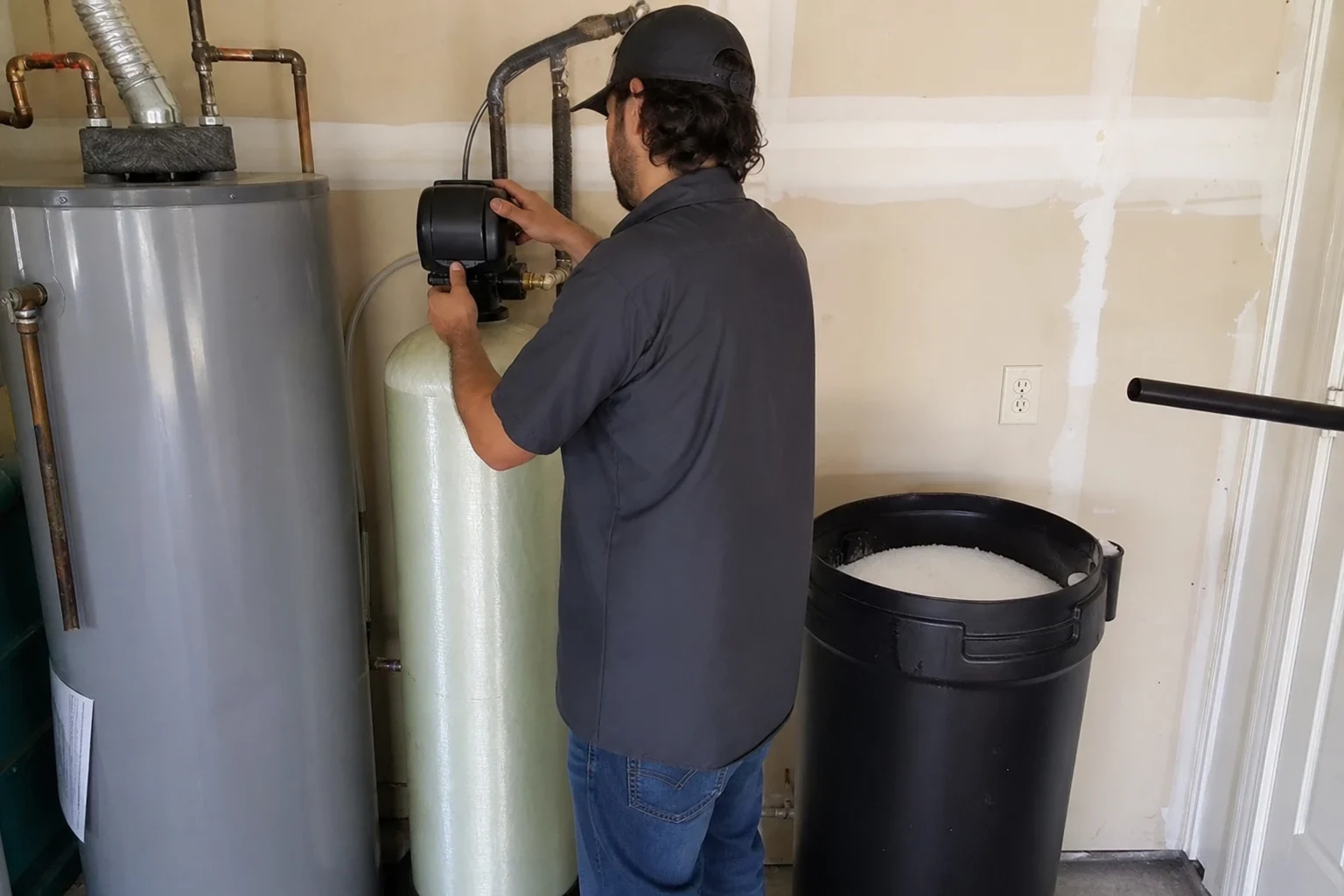
We don't sell a water softener before we know your water. We test hardness at your tap, show you the number, and tell you plainly if a softener will help. If you already own one, we check whether a repair will get it working again.
Test First, Then Decide
A water softener removes calcium and magnesium, the minerals that leave white crust on faucets, spots on glasses and scale inside your water heater. It does that by swapping those minerals for sodium or potassium in a tank of resin beads. It does not remove chlorine, lead or bad taste. That's a job for whole-house carbon filtration or under-sink reverse osmosis.
Hardness changes from one home to the next, so a guess isn't good enough. We run the test, write the result down for you and explain what it means. Sometimes the answer is a softener. Sometimes it's a filter. Sometimes your water is fine and you don't need either.
If you have a softener that has stopped doing its job, we look at it before we talk about a new one. Most problems are a stuck valve, a salt bridge or a worn seal. Those get fixed. When the resin is spent or the control head is too old to get parts for, we tell you replacement makes more sense and why.
What the Work Includes
- Hardness test at your tap
- We measure hardness in grains per gallon and check for iron, which changes what kind of system will work. You see the reading yourself.
- Sizing to your household
- A softener that's too small regenerates too often and wastes salt. One that's too big costs more for no reason. We size it by your hardness number and how much water your home uses.
- Repair of an existing unit
- We clean the brine tank, break up salt bridges, clear the injector, replace seals and check the control valve settings. Plenty of older units have years left once these are sorted out.
- Installation with a bypass
- New units go in with a bypass valve so you can shut the softener off without losing water to the house. We set up the drain line and the brine line, then program the timer or meter.
- Setup walkthrough
- Before we leave, we show you where the salt goes, how to read the settings and how to bypass the unit. Nothing complicated.
Signs a Softener Might Be Worth Testing For
White crust on fixtures
Chalky buildup on shower heads, faucet aerators and the glass shower door that comes back fast after cleaning.
Spotty dishes
Glasses come out of the dishwasher cloudy or spotted even with rinse aid.
Water heater noise
A popping or rumbling tank can mean scale has settled on the bottom. Scale makes the heater work harder to warm the same water.
Soap that won't lather
Shampoo and dish soap take more to get suds, and skin feels tight after a shower.
Your softener quit working
Hard water symptoms are back, the salt level never drops, or the brine tank is full of water. That usually points to a repair, not a new unit.
How a Softener Visit Goes
- 1
We test your water
We draw a sample from a cold tap and test hardness and iron while you watch. Takes a few minutes.
- 2
We give you a straight answer
You get the number and our read on it. If hardness is low, we tell you a softener won't do much and point you to what will, if anything.
- 3
Repair or replace, in writing
For an existing unit, we explain what's wrong and what the fix involves. If a new softener makes sense, you get a written estimate with each part and labor item listed.
- 4
Install and clean up
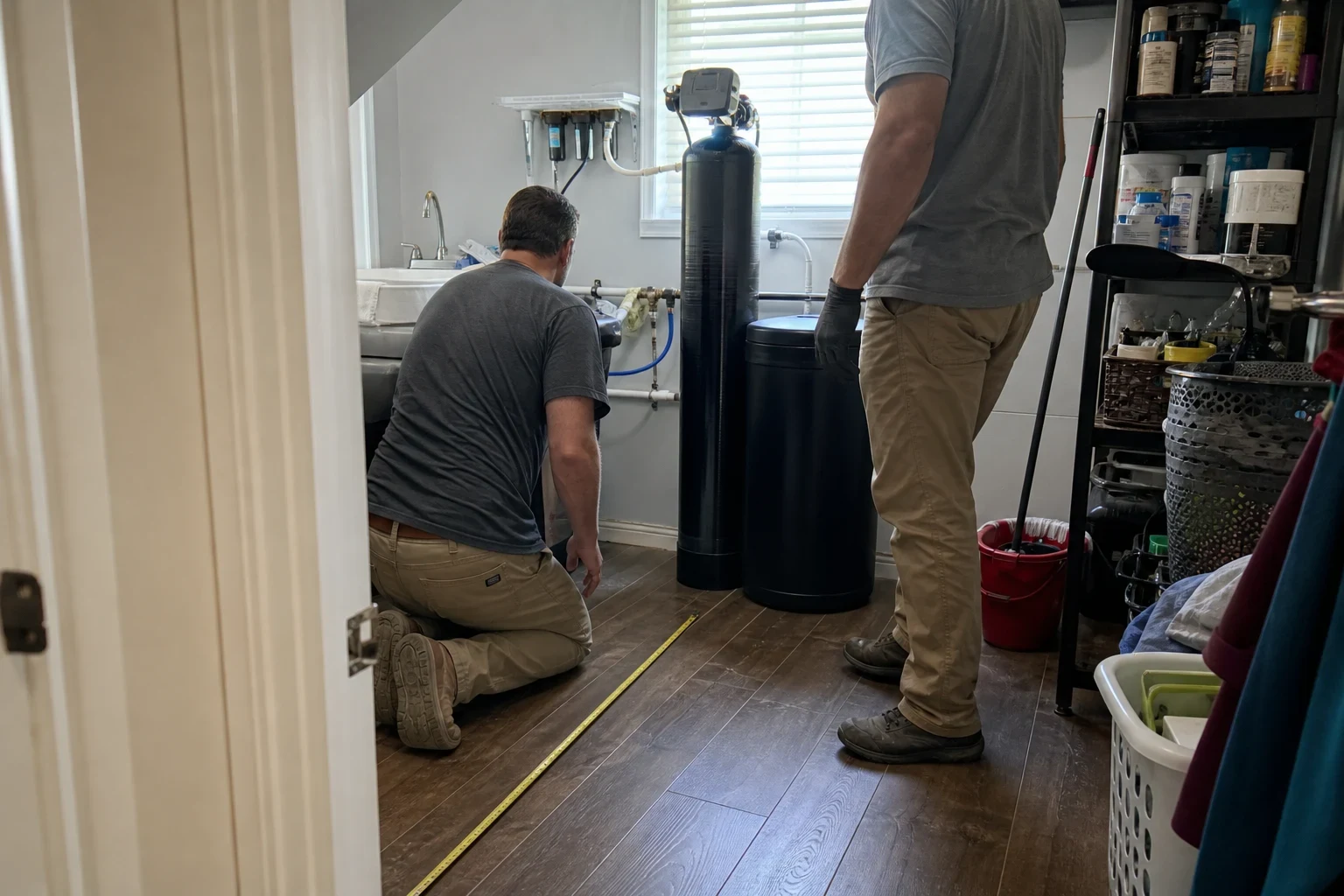
Most installs happen in the garage or utility area near where the water line enters your home. We protect the floor, test for leaks, run a first regeneration and haul off the old unit and packaging.
What Moves the Price
Softener cost depends on what your water needs and what's already in place. A repair on a working unit is usually the smaller bill. We give you the full number before any work starts, so there's nothing added at the end.
- Repair or new unit
- Fixing a valve or cleaning a brine tank costs far less than a new system. We tell you which one fits your unit's age and condition.
- Hardness and water use
- Harder water and bigger households need more resin capacity, which means a larger tank.
- Plumbing at the install spot
- If there's no loop, drain or outlet near the main line, we have to add them. A clean, open spot keeps labor down.
- Iron in the water
- Some iron is fine for a softener. A lot of it may call for iron and sediment filtration ahead of the softener, which adds equipment.
Water Softener Questions
Something not covered here? (972) 992-5114
Does every home around Richardson need a softener?
No. Hardness varies, and many homes do fine without one. That's why we test before we recommend anything. If your number is low, we'll say so.
Can you fix my old softener instead of replacing it?
Often, yes. Salt bridges, clogged injectors, worn seals and bad timer settings are common and fixable. If the resin is worn out or the control valve has no parts available, we'll explain why a new unit is the better spend.
Will softened water taste salty?
At normal hardness levels, most people can't taste it. If you're watching sodium, potassium chloride can be used in place of salt, or you can add under-sink reverse osmosis for drinking water.
Will a softener get rid of chlorine taste or lead?
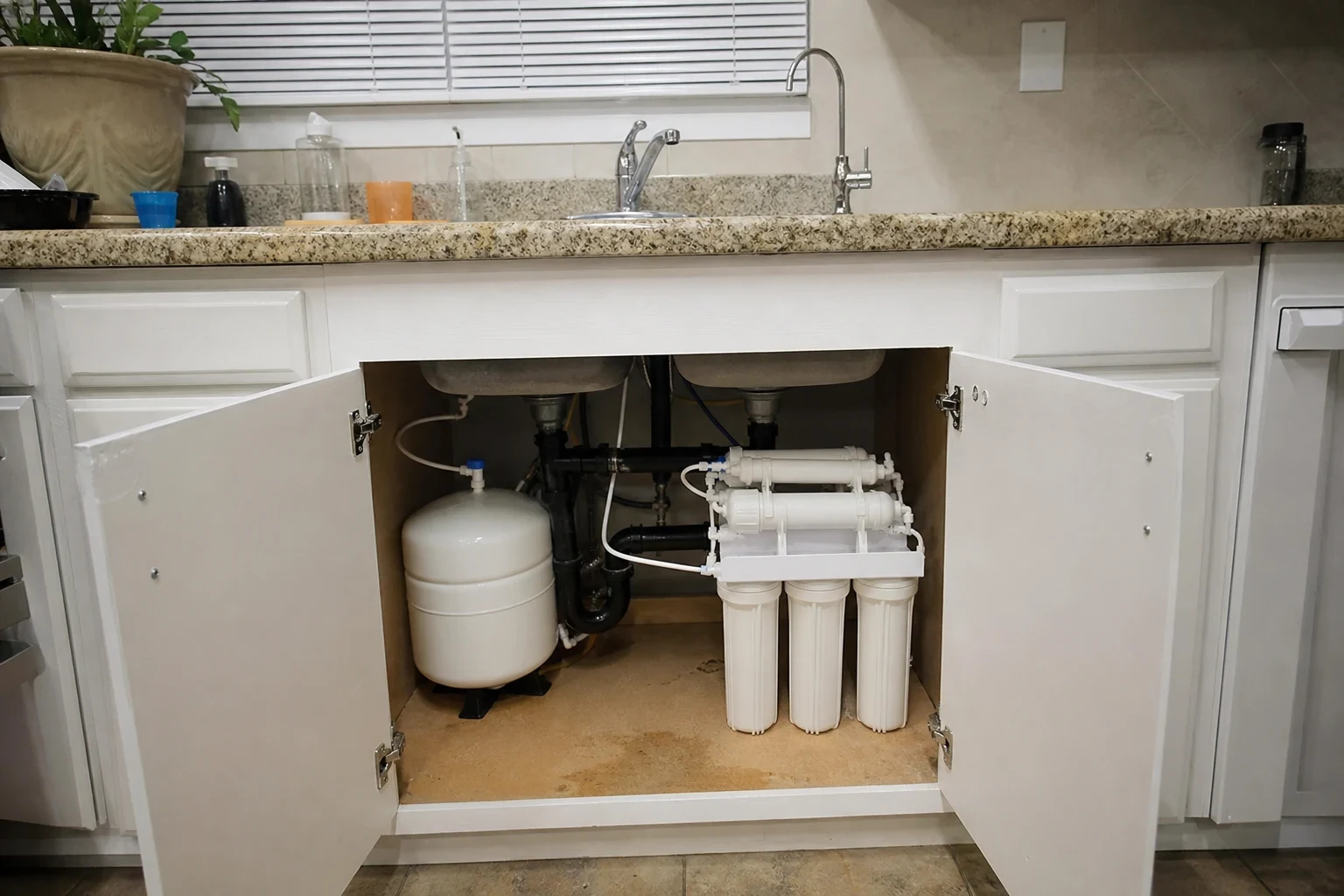
No. A softener only handles hardness minerals. For chlorine taste, look at whole-house carbon filtration. For lead from older plumbing, under-sink reverse osmosis at the kitchen tap is the better fit.
How much upkeep does a softener need?
Mostly adding salt every month or two and checking for a salt bridge. We also handle periodic service as part of our filter replacement and maintenance work.
Find Out If You Need One
Call and we will test your water hardness for free and give you a free quote.