ServicesIron and sediment filtration
Iron and Sediment Filtration in Richardson
Rust-colored stains and sand in your faucet screens have a cause. We test your water, look at the plumbing and any filter you already own, then fix what is worth fixing. If a new iron or sediment filter is the better call, we tell you why.
What this work is and when it fits
Sediment filters catch the solid stuff: sand, grit, scale flakes and pipe rust. Iron filters go further and pull dissolved iron out of the water before it turns orange on your tub, your sink and your white laundry.
Not every home needs both. Many times the problem is a clogged cartridge, a cracked housing or a backwash valve that stopped cycling. Those are repairs, and we start there. When the iron level is higher than a simple cartridge can handle, or the old unit has worn out, we explain what a replacement would do differently.
Around Richardson, most iron and grit complaints trace back to older pipe inside the home, utility line work that stirs up sediment, or a private well. A test tells us which one you have, so you only pay for the fix that matches it.
What the job includes
A water test first
We check iron, sediment and a few related readings before we suggest anything. If you want a fuller lab report, our water testing page covers that.
A look at your existing filter
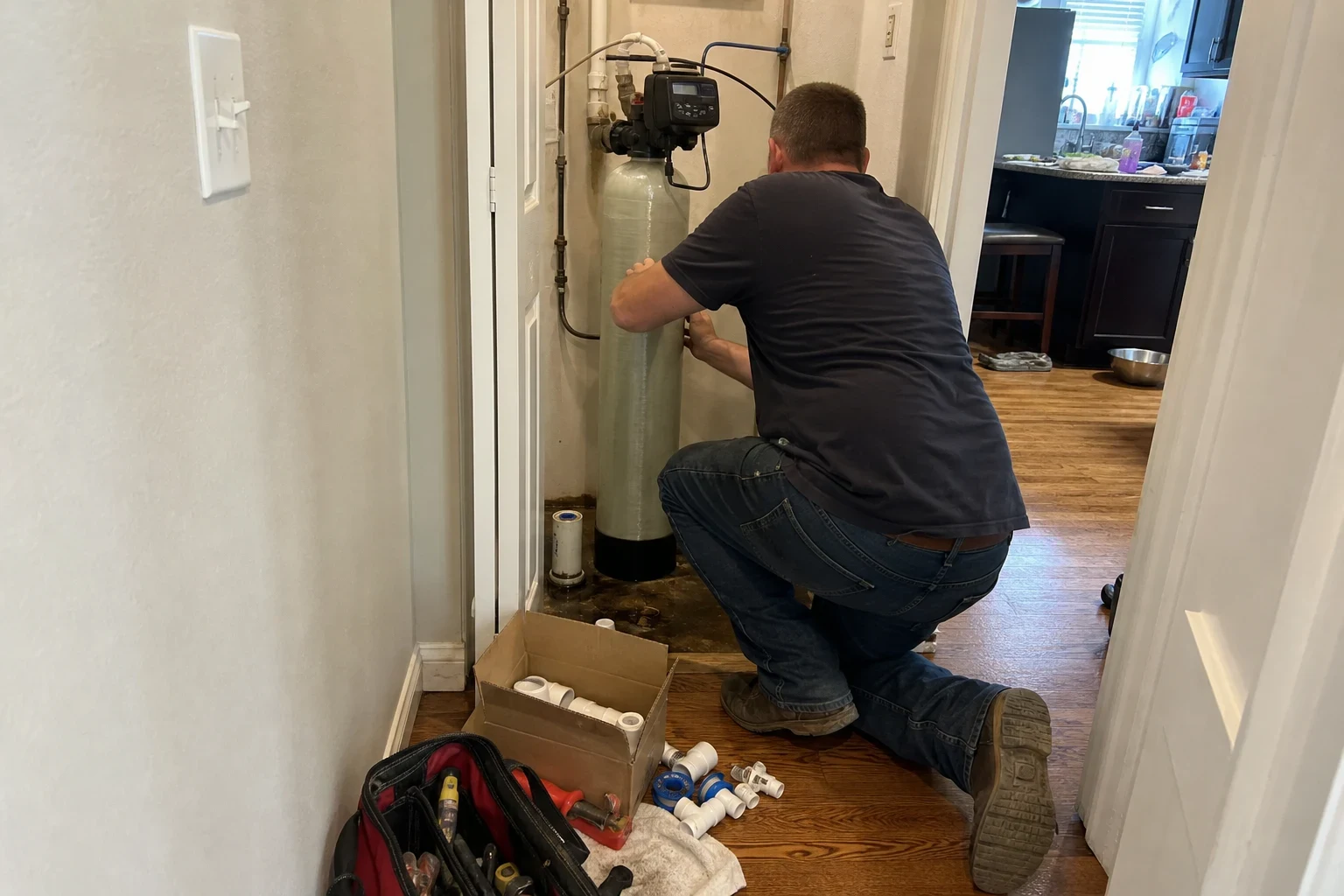
If you already have a system, we open it up. We check the cartridge, housing, O-rings, valve and media bed, and we show you what we find.
Repairs where they make sense
New seals, a cleaned housing, a fresh cartridge or a valve fix often bring an old setup back to work. That costs far less than a new unit.
Sized replacement when needed
If a new filter is the right move, we size it to your iron level and your water use. A filter that is too small clogs fast and lets iron through.
Clean install and bypass
We add shutoff and bypass valves so the filter can be serviced without cutting water to the house. We protect the floor and haul off old parts.
Signs your water needs iron or sediment work
- Orange or brown stains
- Rings in the toilet, streaks under the faucet and yellowed whites in the wash point to iron in the water.
- Grit in the aerators
- Sand or dark flakes in faucet screens and showerheads mean sediment is getting past where it should be stopped.
- Filters clogging fast
- If a cartridge turns brown and slows the flow within weeks, it may be undersized or doing a job it was not built for.
- Metallic taste
- Coffee and tea that taste off, or water with a tinny edge, often comes from dissolved iron.
- Pressure drops after the filter
- Good pressure at the hose bib but weak flow inside can mean a plugged filter or a stuck valve.
- Cloudy water after line work
- If the water runs discolored every time the street gets worked on, a sediment filter can catch it before it reaches your fixtures.
How a visit goes
- 1
You call and describe it
Tell us what you are seeing and whether you have a filter now. We set a time that works for you.
- 2
We test and inspect
We test the water at the tap and near where it enters the house. Then we check your plumbing and any equipment already in place.
- 3
We give you the options
You get a plain answer: repair it, swap a part, or replace the unit. We write out the cost of each so you can compare.
- 4
We do the work
Most fixes and cartridge systems are done in one visit. Backwashing iron filters take longer because they need a drain line and a setup cycle.
- 5
We test again
After the work, we run the water and test it so you can see the change. We also tell you when the next filter change is due.
What moves the price
Cost depends on what the test shows and what is already in your home. Fixing a working system costs much less than buying a new one, which is why we look first. You get the numbers in writing before we start.
- Iron level and type
- Low iron and plain grit can be handled with a cartridge. Higher iron needs a backwashing filter with media, which costs more up front.
- Condition of what you have
- A sound housing that only needs seals and a cartridge is a small job. A cracked tank or failed control valve changes the math.
- Where the filter goes
- Easy access in a garage or utility area keeps labor down. Tight spaces or long runs to reach the main line add time.
- Drain and valves
- Backwashing units need a drain line, and most installs need bypass valves. If those are missing, they get added to the job.
Questions about iron and sediment filters
- City water is treated. Why would I have iron?
- Treated water can still pick up rust from older galvanized or iron pipe inside a house. Work on water lines and main breaks can also send sediment through for a while. Homes on a private well can have iron straight from the ground. A test shows which one applies to you.
- Can you fix my old filter instead of replacing it?
- Often, yes. Leaks usually come from worn O-rings, and poor results often come from a cartridge that is past due. If the tank, valve or media is worn out, we will tell you and show you why replacement is the better spend.
- Will a filter lower my water pressure?
- A properly sized filter with a clean cartridge should cause little drop. Pressure loss usually means the filter is too small or overdue for a change. We size it to how much water your home uses.
- Does an iron filter fix chlorine taste too?
- No. Iron and sediment filters target metals and particles. For chlorine taste and smell, whole-house carbon filtration is the right tool, and the two can work in line together.
- How often do the filters need service?
- Sediment cartridges usually need changing every few months, sooner if your water carries a lot of grit. Backwashing iron filters need less hands-on care but should be checked yearly. Our filter replacement and maintenance service covers both.
Find out what is causing the stains
Call and we will test your water for free and give you a free quote.