ServicesUnder-sink reverse osmosis
Under-Sink Reverse Osmosis in Richardson
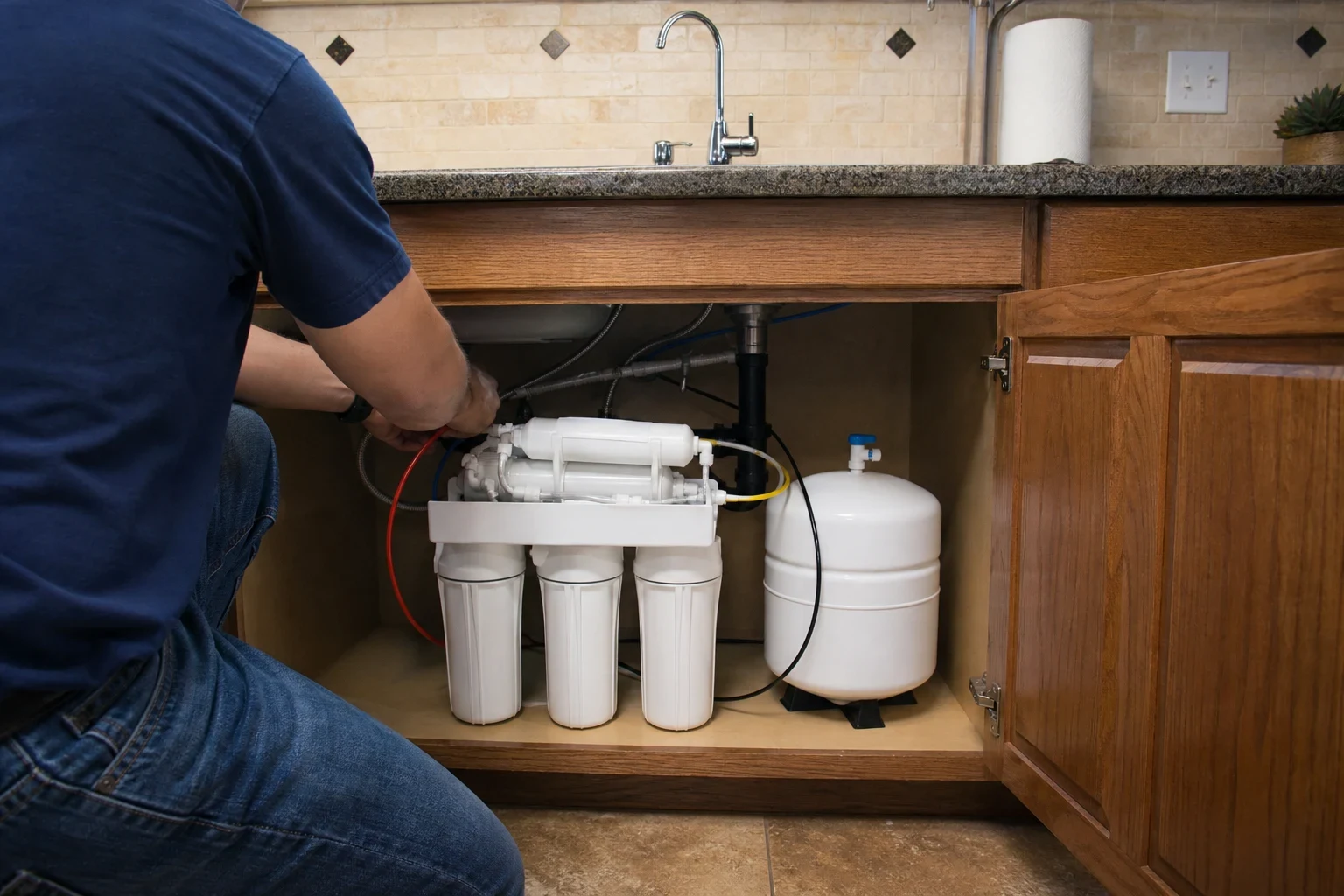
Reverse osmosis puts a small filter system under your kitchen sink and feeds its own faucet, so the water you drink and cook with comes out very clean. Already have one that drips, slows down or tastes wrong? We look at it first. Most problems come down to a filter, a membrane or a fitting.
What an RO System Does and When It Makes Sense
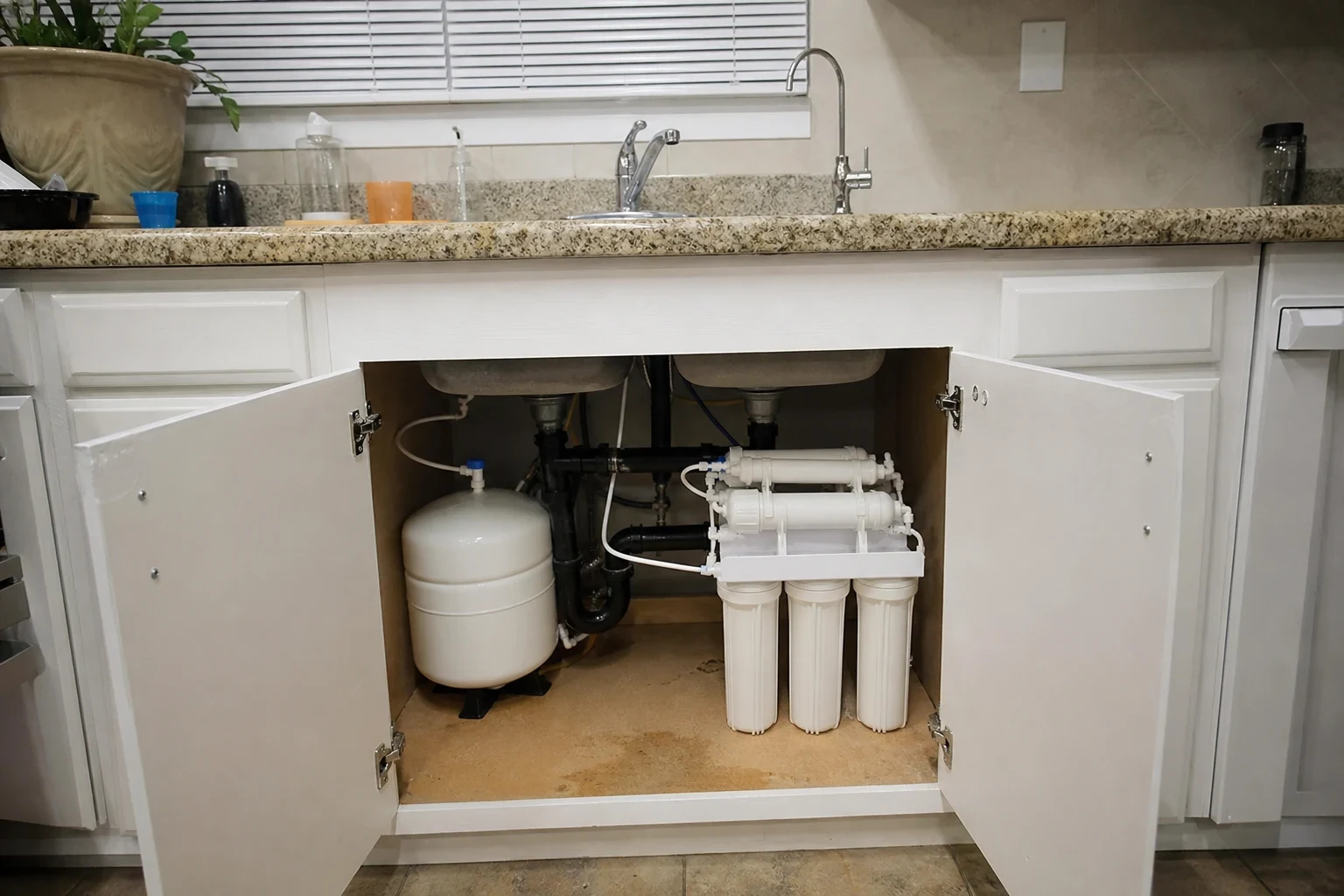
Reverse osmosis forces tap water through a very fine membrane. Carbon prefilters handle chlorine taste and odor first. Then the membrane strips out most dissolved minerals, lead that can come from older pipes and fixtures, and a wide range of trace contaminants. Treated water collects in a small tank under the cabinet until you open the RO faucet.
It only treats the water you drink and cook with. That is the point. You get very clean water where it matters most without treating every shower and toilet in your home. City water around Richardson is treated and tested, so for most families RO is about better taste and extra assurance, not fear.
It is not the right fix for everything. If chlorine smell bothers you in the shower too, whole-house carbon filtration is the better call. If you see orange stains or grit, look at iron and sediment filtration. Not sure what is in your water? Start with water testing and we will tell you what the results support.
What Our RO Work Includes
- A look at what you already have
- If there is a system under your sink now, we check the filters, membrane, tank pressure, tubing and faucet before anything else. A lot of older units only need new parts to work like they did on day one.
- Straight talk on repair or replace
- We tell you which parts are worn and what fixing them involves. When a unit is cracked, missing parts no one makes anymore, or would cost close to a new system to bring back, we say so and explain why.
- Clean, tidy installation
- New systems go under the kitchen sink with a dedicated faucet, a drain connection and a cold water feed, with free installation. We keep tubing neat, leave room for your trash can, and check every fitting for leaks before we pack up.
- Fridge and ice maker hookup
- If you want RO water at your refrigerator, we can run a line to it. We check the run first so we can tell you if it is a simple job or a longer one.
- A filter schedule you can keep
- Before we leave, we show you which filter is which and when each one is due. Our filter replacement and maintenance service can handle it for you if you would rather not.
Signs Your Drinking Water Needs Attention
Your water tastes like a pool
Chlorine or chemical taste in a glass of tap water is the most common reason people call us. The carbon stages in an RO system take care of it.
You live in an older home
Older plumbing and fixtures can add lead or metal taste at the tap even when the city supply is fine. RO is one of the better ways to deal with that at the kitchen sink.
Your RO faucet slowed to a trickle
Slow flow usually means clogged prefilters, a tired membrane or a tank that lost its air charge. Those are fixable, not a reason to buy a new system.
The old system tastes off again
A flat or stale taste often points to an overdue carbon postfilter. If the filters are new and the taste is still wrong, we check the membrane.
Water under the sink
A drip at a fitting or a damp cabinet floor should be looked at soon. Most leaks are a worn fitting or a cracked housing we can replace.
You buy a lot of bottled water
If you are hauling cases home every week, an under-sink system gives you the same kind of water from a faucet.
How a Visit Goes
- 1
We talk on the phone first
You tell us what you are noticing and whether you have a system now. We ask a few questions so we bring the right parts and set aside enough time.
- 2
We check the sink and the water
We look at the space under your sink, your shutoff valve and your drain. If you have an existing unit, we test the flow and look at each stage.
- 3
You get a clear answer
We explain what we found and what it will take, part by part. You decide between repair and a new system with the price in front of you.
- 4
We do the work and clean up
A fix often takes under an hour. A new install usually takes a couple of hours. We flush the system, check for leaks, wipe out the cabinet and show you how it works.
What Moves the Price
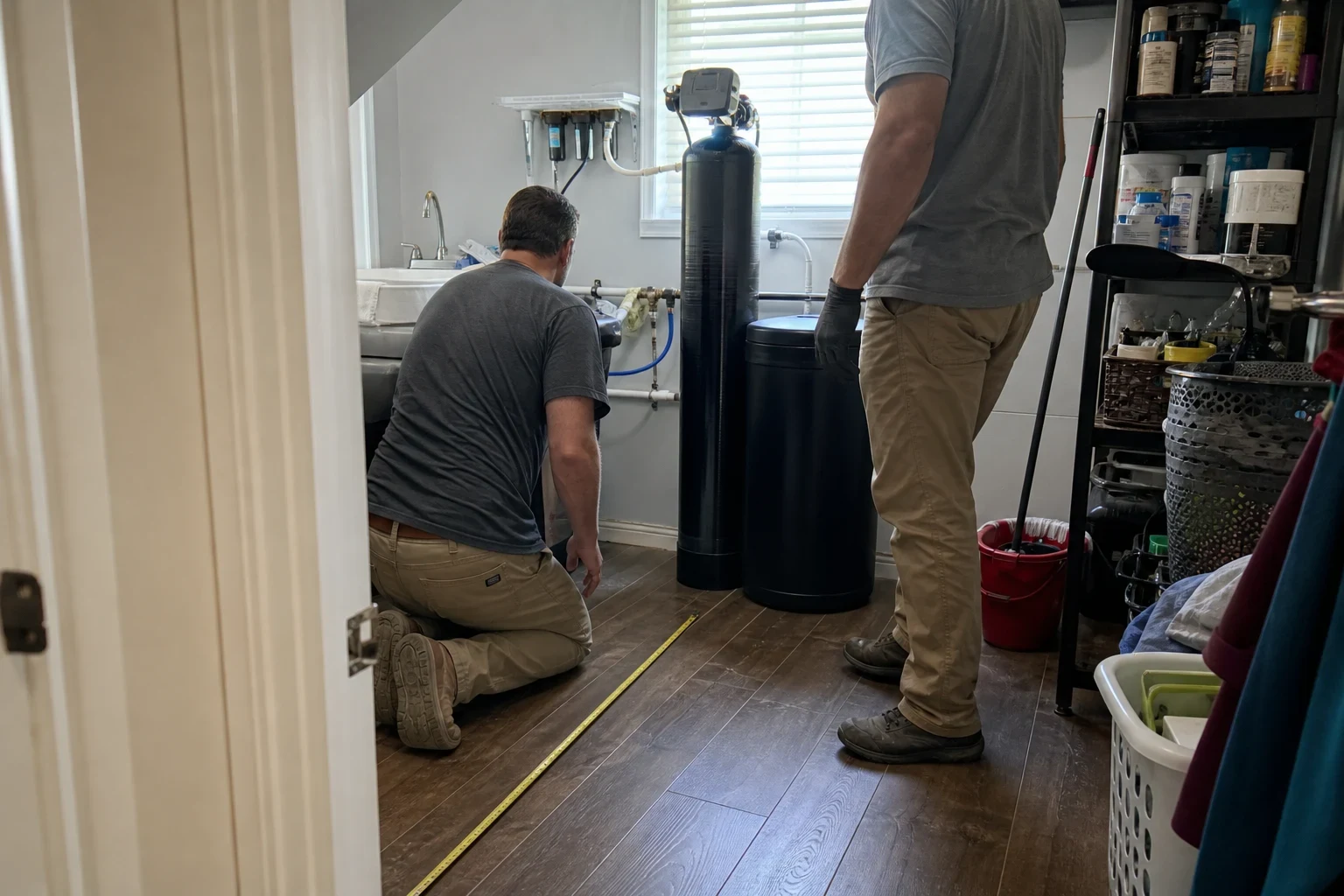
We give you the full price before we start, so there are no surprises when we are done. Fixing a unit usually costs less than replacing it, and we will tell you which one you actually need. These are the things that change the number.
- Repair or new system
- Swapping filters or a membrane costs far less than a full install. Replacing a whole unit only makes sense when the old one cannot be brought back for a fair price.
- The system you choose
- Basic systems with a standard tank cost less than units with extra stages, a remineralizing filter or a higher-flow design. We will tell you if the extras are worth it for your water.
- Space under the sink
- A cramped cabinet, a garbage disposal in the way or an old shutoff valve that needs replacing adds time and parts.
- Extra lines
- Running RO water to a refrigerator or ice maker adds tubing and labor. How far the line has to travel matters most.
Questions About Under-Sink Reverse Osmosis
Something not covered here? (972) 992-5114
Can you fix my old RO system instead of replacing it?
Often, yes. Most units come back with new filters, a new membrane or a fresh tank charge. If the housings are cracked or parts are no longer made, we will explain why a new system is the better spend.
Does RO waste water?
Yes, some. The membrane flushes the minerals it removes down the drain, so a share of the water it processes goes to waste. Newer systems waste less than older ones, and the amount is small next to normal household use.
How often do the filters need changing?
Prefilters and the carbon postfilter are usually changed about once a year, sometimes sooner. The membrane lasts longer, often a few years, depending on your water and how much you use. We leave you a simple schedule.
Will RO take the minerals out of my water?
It removes most of them. That is why the water tastes clean and flat compared to tap water. If you prefer a little mineral taste, a remineralizing filter can add some back.
Do I need a water test first?
Not always. If your concern is taste or older plumbing, RO is a sound choice either way. If you suspect something specific, water testing first tells us exactly what we are treating.
Get Better Water at Your Kitchen Sink
Call and we will test your water for free and give you a free quote on your RO system.